
Gulfport, MS · Garage Door Service
What That Noise From Your Garage Door Is Telling You
Gulfport homes built 1980s-90s face specific garage door wear from mild coastal humidity and rare freeze snaps. Here's what noises mean and when to call.
- Repairs & new doors
- Springs & openers
- Serving 6 nearby communities
Checking It Yourself
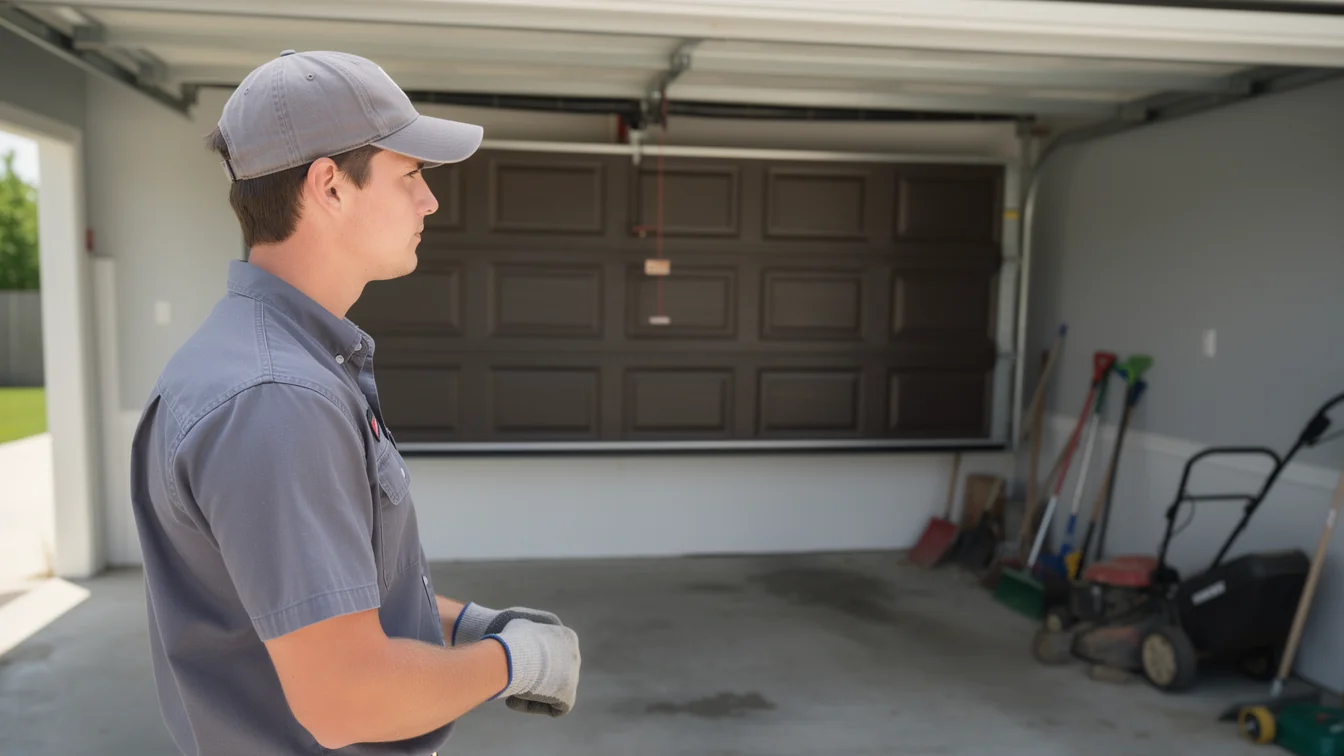
Most houses here went up between 1979 and 2006, with the bulk of the stock dating to the 1980s and 90s across the area's thirteen named neighborhoods, which means the original springs and tracks on a lot of these doors are now thirty to forty years old. Before you call anyone, pull the release handle, lift the door by hand, and feel for where it drags. A door that's hard to lift manually usually means the torsion spring has lost tension - that's age, not a mystery. Look at the tracks for rust bloom at the brackets, and check rollers for flat spots or cracked nylon. With 32,605 owner-occupied houses in the service area, a huge share of them carry garage doors installed during that same building boom, so if your neighbor's door started grinding last year, yours is probably not far behind. Listen for the difference between a dry squeal (lube it, cheap fix) and a metallic bang (spring or cable, stop touching it). A rattling that happens only on the way down often points to loose roller brackets, which you can tighten yourself with a socket wrench if you're comfortable on a ladder. Anything involving the torsion spring itself - don't. That spring is wound under enough tension to break a wrist.
The Problem
The problem in Gulfport isn't usually a bad opener. It's hardware that was installed once, in the 80s or 90s, and never touched again. A steel door from that era with its original galvanized springs is well past the point where manufacturers expect it to still be working. Add humidity and salt air and the corrosion clock runs faster than it would on dry inland hardware of the same age. At a median household income of $66,472, a lot of homeowners here are weighing a $200 roller job against a $900 opener swap, and that math matters when the door is pushing forty years old - sometimes the repair costs more than the door is worth, and you're better off replacing the whole unit instead of chasing one more part. The honest limitation: if your springs, rollers, and opener all need attention at once, we're not going to nickel-and-dime you through three separate visits when a full door swap gets you new everything for close to the same labor cost. We'll tell you straight which side of that line you're on before we start.
What the Weather Here Does to It
The climate here sits in a mild band with occasional freeze, not the deep-freeze cycles that crack hardware up north. That changes what failure looks like. Instead of metal snapping from cold contraction, you get slow corrosion - springs that rust from the inside of the coil out, track bolts that seize, and cables that fray quietly under a thin rust skin you can't see until a strand pops. Humidity gets into bearing surfaces and dries out factory lubricant faster than it would in a dry climate, which is why a door that was quiet in March starts groaning by July. The occasional hard freeze here is a different animal - it doesn't crack steel, but it does stiffen grease overnight, so a door that was fine the day before suddenly feels heavy and slow on a cold morning. That's not a broken spring, usually, just thick grease fighting cold metal. Give it a few minutes running before you assume the worst. The real damage from this climate comes from the wet months in between, not the rare freeze itself.
When to Get Help
Call when you hear a loud bang followed by the door feeling heavier to lift - that's a spring letting go, and it won't fix itself. Call when a cable looks frayed, even a little; a snapped cable under tension is a hazard, not a maintenance item. Call when the opener runs but the door barely moves, because that's usually spring tension gone, not a motor problem, and running the opener against a dead spring burns out the gears. We work this stretch from Lyman out to Long Beach, both about seven miles off, over to Biloxi at eight and D'Iberville at ten, and out toward Pass Christian and St. Martin around twelve. If you're out toward Saucier, Gulf Hills, or Ocean Springs in the fourteen-to-seventeen-mile range, or as far as Diamondhead, Bay St. Louis, or Gulf Park Estates, the housing stock and the weather pattern are the same, so the same wear shows up on the same schedule. Check out the <a href="/">home page</a> for how to reach us.
Frequently asked questions
Why does my garage door sound worse in summer than winter here?
Humidity gets into the lubricant on your rollers, hinges, and torsion bearings and dries it out faster than a drier climate would. That leaves metal rubbing on metal, which is where the squeal and grind come from. A cold morning with a rare freeze can also stiffen old grease temporarily, but that's a different, shorter-lived noise.
Is a loud bang from the garage always a broken spring?
Not always, but it's the most common cause, especially on doors from the 1980s-90s housing boom that make up most of the stock here. A bang followed by the door suddenly feeling heavy to lift by hand is almost always a torsion spring letting go. Stop using the opener and get it looked at before the cable takes on load it wasn't built for.
My door is original to a house built in the 90s. Should I replace it or keep repairing it?
At thirty-plus years old, original hardware on a door from that era is near or past its expected service life. If you're already replacing springs and rollers in the same visit, full replacement often costs close to the same as stacking repairs, and you get new hardware across the board instead of one more patch.
Related garage door services in Gulfport
More garage door guides
Book garage door service in Gulfport
Call now or request a quote - tell us what the door is doing and where you are.