
Gulfport, MS · Garage Door Service
Roller Replacement for Diamondhead's 1990s Garage Doors
Diamondhead homes built around 1996 came with steel rollers that wear fast in Gulf Coast humidity. We drive out from Gulfport to swap worn rollers for steel or nylon.
- Repairs & new doors
- Springs & openers
- Serving 6 nearby communities
Stocked Parts
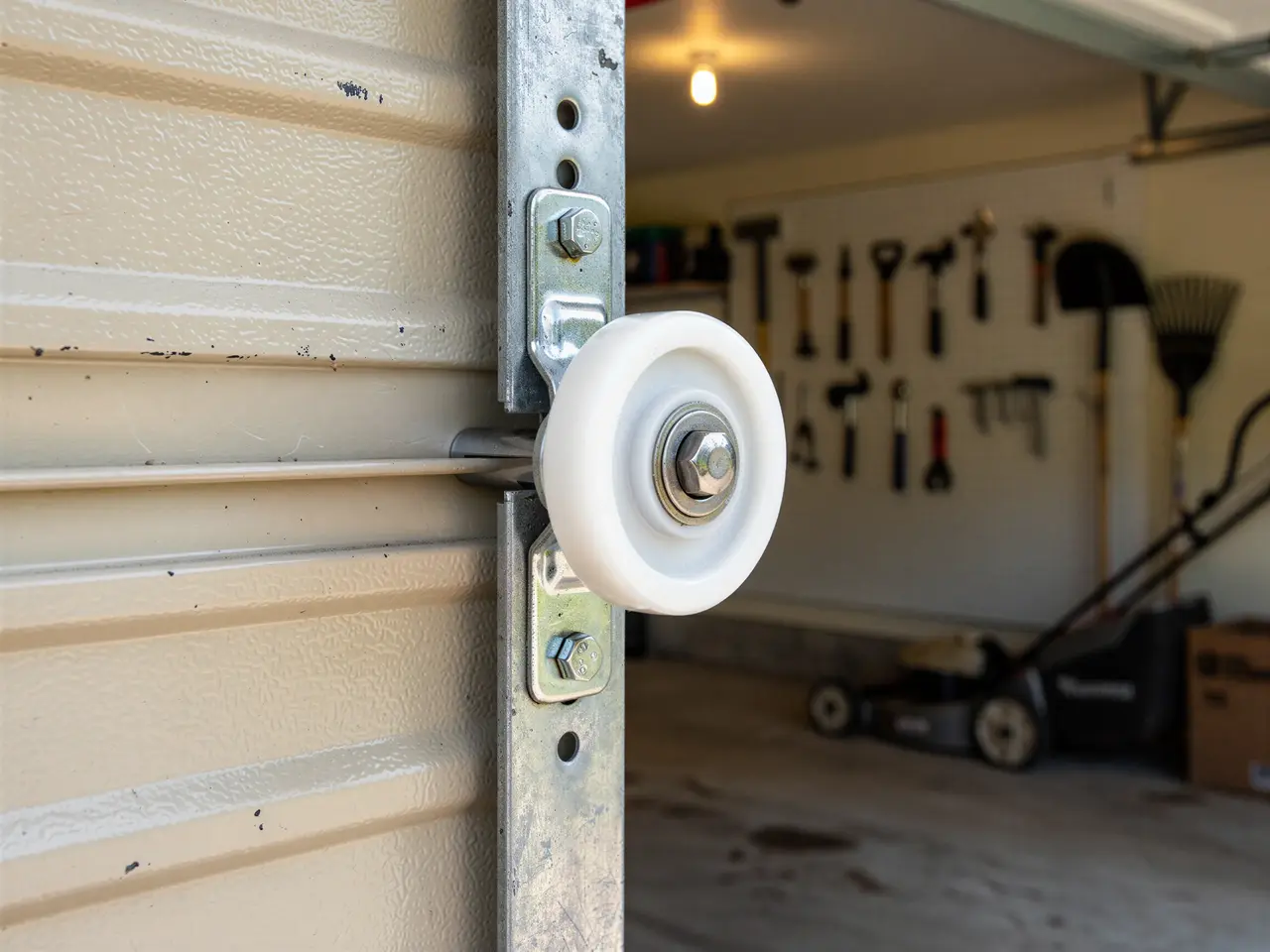
Most of the garage doors we see out in Diamondhead are steel sectional doors from the mid-1990s build wave, either a single 9x7 or a double 16x7, hung on builder-grade steel rollers with open bearings. That's the standard hardware for a house put up in that era across this part of the coast - nothing exotic, but it's not the sealed 10-ball nylon roller you'd pull off a door installed last year either. We carry both: galvanized steel rollers for a direct swap that keeps the door's original feel, and quiet 7-ball nylon rollers for owners who want less noise and less wear on the track. For a standard double door we're usually swapping 10 rollers in one visit, and we bring stock sized for the narrower track common on doors from that build period, not the wider track you'd find on something built after 2005. If your track is bent rather than just worn, that's a different repair and we'll tell you before we start charging for parts you don't need.<br><br>What we don't stock on the truck is anything custom - oversized commercial rollers or a track profile outside the standard residential range. Those get ordered, and we'll say so up front rather than guess.
The Symptom
A steel roller on an open bearing doesn't fail quietly. You'll hear it first - a grinding or rattling that gets louder as the door travels, usually worse on the bottom two panels where the weight loads the roller hardest. On a house from the 1996 build year, 25-plus years of opening and closing means the bearing surface has worn flat on one side, so the roller doesn't spin true anymore. It scrapes the track instead of rolling through it. You'll often see a groove worn into the galvanized track itself where a bad roller has been dragging for months.<br><br>The other sign is a door that jerks or hesitates at a specific point in the travel every single time - same spot, same hitch. That's a flat-spotted roller catching on a track seam, not a spring or opener problem, even though a lot of owners call it in as one. Gulf Coast humidity doesn't help; the mild climate here means less freeze-thaw cracking than you'd get further north, but the damp air still corrodes an unlubricated steel bearing faster than a dry climate would. If the roller housing has rusted through at the stem, that's not a lubrication fix - the roller needs to come off.
Time on the Job
A straight roller swap on a double door, all 10 rollers, steel for steel, runs about an hour once we're on site. Going to nylon rollers takes a little longer because we're also checking and sometimes adjusting the track gap, since nylon rollers run slightly differently in a track that was set up for steel. A single door is quicker.<br><br>We travel out from Gulfport for this - it's about 17 miles to Diamondhead - so plan on that drive being part of the appointment, not a separate stop. We don't keep a branch or a standing crew in Diamondhead itself; the same truck and the same guy doing the Gulfport side of the schedule handles this call too. If you've also got a bent track section or a spring that's going along with the rollers, that adds time, and we'd rather diagnose all of it on the first visit than send you a second bill for something we should have caught.
Can You Do This Yourself
Rollers are one of the more doable DIY repairs on a garage door, and we'll say that straight - this isn't a job we're trying to talk you out of for the sake of the call. If you're comfortable with a ladder, winding bars are nowhere near the job (rollers don't touch spring tension on a properly balanced door), and you can get the door to a safe working height, swapping a top or middle roller is within reach for a handy homeowner.<br><br>Where it gets risky is the bottom rollers on a double door from this era - the steel track on a 1990s-built house is often narrower and has more rust pitting after decades near the coast, so a roller can bind or a track bracket can let go while you're mid-swap. If the track itself is bent, warped, or the bracket is pulling away from the jamb, stop and call it in rather than forcing a new roller into a track that's no longer straight. A roller that looks fine sitting on the shelf but won't seat right in a bent track is a sign of a bigger problem, not a bad part.
What the Fix Involves
We start by running the door through a full cycle to see which rollers are grinding, flat-spotted, or visibly rusted at the stem, and we check the track for wear grooves at the same time - a worn groove means the track may need light reshaping even after new rollers go in. Then we release tension on the section being worked, pull the roller stem from the hinge or bracket, and seat the new one, working section by section rather than pulling all 10 at once so the door never comes fully apart on the track.<br><br>Once new rollers are in, we re-run the door a few times checking for smooth travel top to bottom and listening for any remaining catch point. If the track has a groove deep enough that the new roller still hangs up on it, that's an honest conversation about replacing a short section of track rather than pretending a new roller alone fixes a damaged rail. We won't sell a roller swap on a door where the track is the real problem.
Frequently asked questions
How do I know it's the rollers and not the spring?
A spring problem shows up as the door feeling heavy, hard to lift by hand, or an opener straining on every cycle. A roller problem is noise and a specific hitch at the same point in travel, with the door still lifting at normal weight. If the door sounds rough but still opens with normal effort, start with the rollers.
Will steel or nylon rollers last longer in a humid climate?
Nylon rollers have sealed bearings, so they hold up better against the Gulf Coast humidity than an open steel bearing, which corrodes faster once the factory grease wears off. Steel is cheaper and matches the original hardware on a 1990s door, but nylon is the quieter, lower-maintenance option long term.
Do you keep a crew based in Diamondhead?
No - we run out of Gulfport and drive out to Diamondhead for calls, about 17 miles each way. There's no separate branch or standing crew here; the same technician covering Gulfport handles this side of the route too.
More garage door services in Diamondhead
Book garage door service in Gulfport
Call now or request a quote - tell us what the door is doing and where you are.